
The physician shortage will worsen – unless Congress acts now
Congress has an opportunity to reverse the worsening physician shortage and bolster access to care for millions of people.

Congress has an opportunity to reverse the worsening physician shortage and bolster access to care for millions of people.
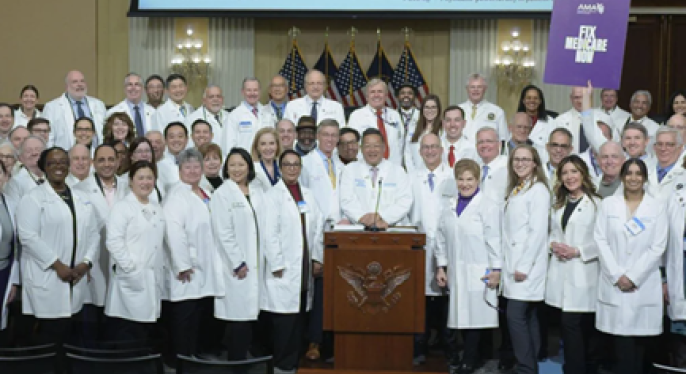
Bipartisan support for Medicare reform is building in Congress, as physicians witnessed firsthand at the 2025 AMA National Advocacy Conference.

Another year, another cut to the Medicare payments needed to keep physicians and their practices going. Congress must turn toward long-term reform.
While some might worry that adjusting Medicare rates is expensive, in actuality, it is a smart investment since the cost of inaction is much higher. The status quo –paying for expensive, avoidable emergency room visits when chronic diseases go unchecked due to patients having long wait times and issues with health literacy—is far more devastating to our taxpayers and our healthcare system.
The Medicare Physician Fee Schedule is one of the most important forces shaping our healthcare system. It influences what care costs, where patients receive it -- and whether independent physicians can keep serving their communities. Since 2001, Medicare physician reimbursement has fallen 33%, after accounting for inflation. Meanwhile, the costs of staffing, rent, technology, insurance, and medical supplies have climbed steadily.
Getting to a doctor isn’t always simple in Louisiana. Gone are the days when a country doctor could drop in and make a house call. For families in rural parishes, it can now mean a long drive or waiting weeks just to get in the door. Unfortunately, when care isn’t easy to access, people tend to put off getting the treatments they need, jeopardizing their health and longevity.
For years, independent physicians have been asked to do more with less. Delivering high quality care is getting more and more difficult. Rural communities, in particular, are getting hammered with worsening doctor shortages while Americans are experiencing higher rates of chronic disease. Medicare payment policies are only making analready dire situation that much worse.
Medicare is a cornerstone of our health care infrastructure, providing coverage for 2.3 million Michiganders, or nearly 1 in 4 people in the state. However, the financial framework supporting this program has remained largely static. Over the last 25 years, the cost of running a medical practice — from hiring staff to implementing essential technology — has increased by more than 60%. Meanwhile, when adjusted for inflation, Medicare physician reimbursement has actually declined by 33% since 2001.
Congress must fix the Medicare system so that physicians are able to stay in practice, especially in underserved communities. At minimum, this means tying annual Medicare updates to inflation. This would go a long way toward bolstering access to care and ensuring that patients can address health concerns early.
As a practicing rheumatologist in Goldsboro, many of my patients are older adults living with arthritis and other chronic conditions. Accessing the care they need can be a challenge, particularly as doctors navigate the impact of Medicare’s declining payments, which threaten our ability to provide timely, high-quality care. That’s why I want to thank U.S. Rep. Greg Murphy, MD, for his recent introduction of the Provider Reimbursement Stability Act (H.R. 8163).
Congresswoman Mariannette Miller-Meeks, M.D. (IA-01), alongside Congressmen Herb Conaway Jr., M.D. (NJ-03) today introduced the Medicare Physician Data-Driven Performance Payment System Act, legislation to modernize Medicare’s physician payment system, reduce burdens on providers, and improve care for patients.
A bill introduced this week with backing from representatives on both sides of the aisle would give the Centers for Medicare and Medicaid Services more flexibility to adjust physician payments while capping the scale of year-to-year rate changes.
We’re dedicated to raising awareness of Medicare physician payment system problems so that we can work towards solutions that protect physician practices and patients’ access to care. It’s vital that patients and physicians use their voices to advocate for change.
Click the button below to learn about the various ways to get involved in the fight to Fix Medicare Now.