
The physician shortage will worsen – unless Congress acts now
Congress has an opportunity to reverse the worsening physician shortage and bolster access to care for millions of people.

Congress has an opportunity to reverse the worsening physician shortage and bolster access to care for millions of people.
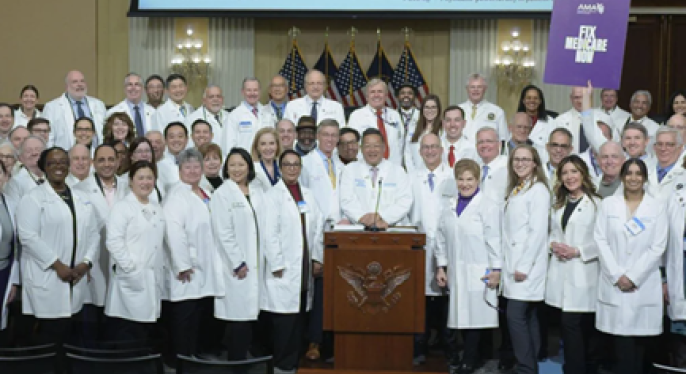
Bipartisan support for Medicare reform is building in Congress, as physicians witnessed firsthand at the 2025 AMA National Advocacy Conference.

Another year, another cut to the Medicare payments needed to keep physicians and their practices going. Congress must turn toward long-term reform.
Several physician groups have voiced their support for a bill, introduced Jan. 31, that aims to cancel the 2.83% Medicare physician pay cut and provide a 2% pay increase to stabilize practices and protect patient access to care.
This slideshow presents the statements of support from medical organizations and co-sponsoring legislators of the bipartisan Medicare Patient Access and Practice Stabilization Act.
From Washington to Florida, ob-gyn and physician executive health care leader Nariman Heshmati, MD, sees the financial strains to stay in the back.
With today's medical advancements and technologies, innovation in the surgical field is creating possibilities for patients that did not exist a few years ago.
Cuts to Medicare physician reimbursement have taken effect, as proposed legislation intended to eliminate those cuts did not pass.
Lawmakers don't have to act on the recommendations. But the calls from MedPAC could add pressure in a growing campaign to get Congress to change the way Medicare pays physicians.
The Medicare Payment Advisory Commission (MedPAC) voted to recommend linking next year’s physician payment update to the growth in the cost of providing care, exhibiting a keen grasp of what is needed to help ensure patients will have continued access to care.
Concerns among physicians about the future of health care have intensified in the last several years as payers continue to cut reimbursements.
Internist Jason Goldman, MD, brings a personal touch to care, but isn’t sure how long that can survive under a broken Medicare payment system.
We’re dedicated to raising awareness of Medicare physician payment system problems so that we can work towards solutions that protect physician practices and patients’ access to care. It’s vital that patients and physicians use their voices to advocate for change.
Click the button below to learn about the various ways to get involved in the fight to Fix Medicare Now.