
The physician shortage will worsen – unless Congress acts now
Congress has an opportunity to reverse the worsening physician shortage and bolster access to care for millions of people.

Congress has an opportunity to reverse the worsening physician shortage and bolster access to care for millions of people.
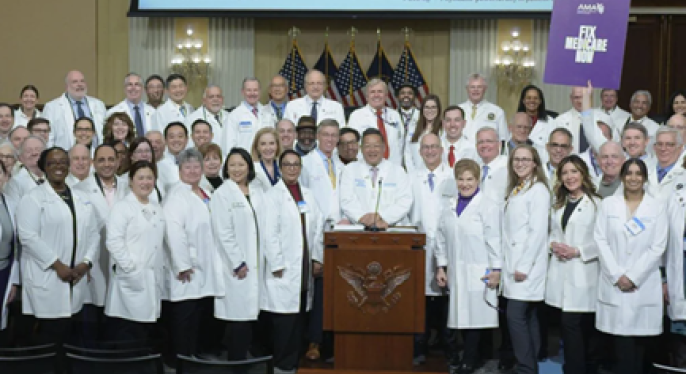
Bipartisan support for Medicare reform is building in Congress, as physicians witnessed firsthand at the 2025 AMA National Advocacy Conference.

Another year, another cut to the Medicare payments needed to keep physicians and their practices going. Congress must turn toward long-term reform.
Ambitious efforts by some of the nation’s largest retailers to open health clinics nationwide have met with disappointing results, which underscore the precarious financial reality of care delivery today. And it sparks an obvious question for policymakers to consider: If retail giants can’t make today’s care delivery model work financially, how on earth can physicians in private practice?
The Centers for Medicare & Medicaid Services (CMS) is proposing a 2.8% cut to physician Medicare payments starting Jan. 1. At the same time, CMS also estimates that the cost of practicing medicine next year—paying clinical and administrative staff, rent and purchasing equipment and supplies—will rise by 3.6%.
Access to affordable, high-quality health care is essential — particularly for more vulnerable Americans such as seniors and the disabled. Unfortunately, a dysfunctional Medicare physician compensation system is threatening to undermine access to care.
More than one-third of North Carolinians face difficulties accessing primary care doctors. Even worse, on its current path, the Tar Heel state is projected to be short 7,725 doctors overall by 2030, including 1,885 too few primary care providers.
Physicians have spent more than a decade pushing for changes to the Medicare physician payment system so that they have the financial resources to keep caring for the nation’s oldest citizens. But the necessary reforms still haven’t come to fruition.
Many leaders feel physician pay is not keeping up with the rising cost of practice, and CMS and other payer moves indicate this trend could continue.
A bipartisan group of U.S. senators has introduced the Physician Fee Stabilization Act. The bill would increase the budget-neutrality threshold under the Medicare physician payment schedule to $53 million in 2026, up from $20 million. The bill also would provide regular indexing of the threshold to the Medicare Economic Index.
Medicare payments to physicians should be based on inflation instead of simply cutting reimbursement to doctors, according to the American Medical Association.
The AMA urged the administration to work with Congress to enact a permanent, annual inflation-based update to Medicare physician payments.
We’re dedicated to raising awareness of Medicare physician payment system problems so that we can work towards solutions that protect physician practices and patients’ access to care. It’s vital that patients and physicians use their voices to advocate for change.
Click the button below to learn about the various ways to get involved in the fight to Fix Medicare Now.